The Difference Between FUE and DHI Techniques: Which Is Best for Your Case?
Many people study the difference between FUE and DHI techniques: which is best for your case? before taking the step of hair transplantation, because choosing the right technique doesn’t depend on name recognition or popularity alone—it depends on fine details related to hair condition, baldness area, donor zone strength, and the desired cosmetic outcome.
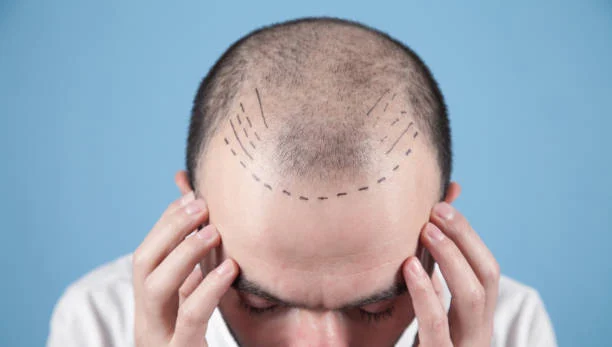
The Difference Between FUE and DHI Techniques: Which Is Best for Your Case?
With advances in cosmetic medicine, hair transplantation has become more precise and successful—but this progress can sometimes make the decision harder for patients who are torn between multiple techniques.
FUE and DHI are among the most popular modern hair transplant techniques. Both aim to restore lost hair naturally, but they differ in how follicles are extracted and implanted, in precision level, session duration, cost, and the cases they suit best. Understanding the difference between FUE and DHI techniques: which is best for your case? helps you make an informed decision instead of relying only on advertising or general impressions.
What is the FUE technique?
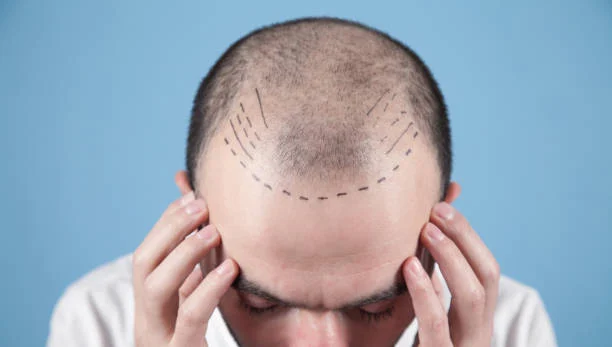
When discussing the difference between FUE and DHI techniques: which is best for your case?, you first need to understand FUE clearly. FUE stands for Follicular Unit Extraction—extracting follicular units one by one from the donor area, typically the back or sides of the head where hair is more resistant to shedding. After extraction, the physician creates very small channels in the recipient area, then carefully implants the follicles into these channels.
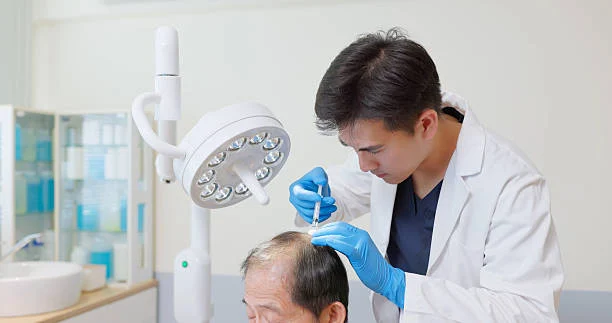
What is the FUE technique?
This technique has become very popular because it combines precision and effectiveness, doesn’t require a large surgical incision or sutures, and recovery is usually faster than older methods. The marks it leaves are very tiny and often unnoticeable after healing, making it suitable for many patients who want a natural result without a visible surgical scar.
One of FUE’s key advantages is that it suits cases needing a large number of follicles, such as advanced baldness or wide gaps in the front or middle of the scalp. It’s also often less expensive than some other techniques, making it a relatively economical option without sacrificing good results. However, its success depends heavily on the physician’s experience—channel creation, implantation angle, and follicle direction directly affect the final appearance.
A point to note is that the procedure usually takes longer as the number of follicles increases, and some large cases may require two or more sessions. Also, channel creation happens immediately before implantation, which means control over each follicle’s angle may be less flexible compared to DHI in some precise cosmetic applications. So FUE remains very strong, but its suitability varies by individual case.
Read also: How Long Do Cosmetic Dental Veneers Last? And How to Maintain Them?
What is the DHI technique?
To understand the difference between FUE and DHI techniques: which is best for your case?, you must stop at DHI—Direct Hair Implantation.
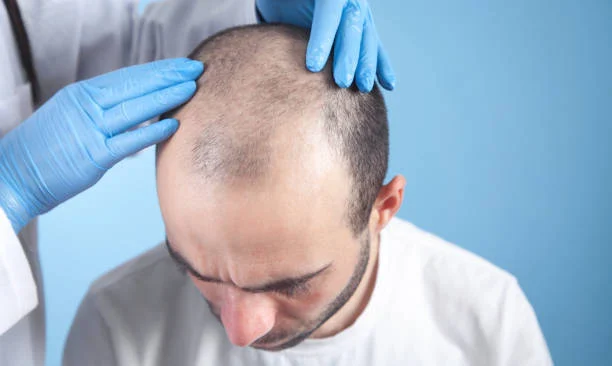
This technique is an advanced development in hair transplantation and relies on implanting follicles directly after extraction using a special tool known as a Choi implanter pen. This pen allows the physician to extract the follicle and then implant it into the scalp in a nearly direct step, without pre-opening channels separately as in traditional FUE.
What is the DHI technique?
DHI’s strength lies in its high ability to control follicle angle, depth, and growth direction—crucial for achieving a natural, precise look, especially in the frontal hairline or areas requiring high cosmetic detail. For this reason, many physicians prefer it when the priority is a refined final appearance over the sheer number of implanted follicles.
Another advantage is that it may reduce the time follicles stay outside the body, since implantation happens quickly after extraction. This can help improve result quality in some cases. It may also provide denser appearance in small or medium areas, especially when the goal is to fill specific gaps rather than cover a very large surface.
However, DHI isn’t ideal in all cases. It’s often more expensive than FUE due to advanced tools and the high precision required during the procedure. Also, the number of follicles that can be implanted in a single session may be relatively lower in some cases, making it less suitable for very extensive cases needing large coverage. So it’s an excellent technique—but not necessarily the best for every patient.
The difference between the two techniques
The difference between FUE and DHI techniques: which is best for your case? becomes clear when comparing method, results, cost, speed, and suitable case types.
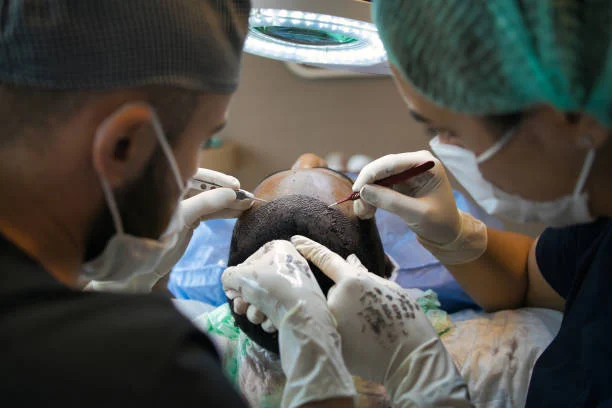
In FUE, follicles are extracted first, then channels are prepared in the recipient area, then hair is implanted. In DHI, implantation is typically done directly using the implanter pen without a separate channel-opening step. This seemingly small technical difference affects the workflow and final outcomes.
The difference between the two techniques
In terms of precision, DHI offers better control over implantation angle and hair direction, giving it an advantage in cases requiring very fine cosmetic detail. FUE also delivers excellent natural results, but it relies more heavily on the physician’s skill during channel creation and follicle distribution.
In terms of density, DHI may provide better results in limited areas like the front of the scalp—especially when the goal is to draw a precise, symmetrical hairline. FUE is more suitable when the requirement is to implant a large number of follicles to cover a wider scalp area. Therefore, the question—the difference between FUE and DHI techniques: which is best for your case?—cannot be answered theoretically alone, because the required area directly affects the choice.
In terms of cost, FUE is generally less expensive than DHI, since the latter requires special tools, more time, and higher execution skill. DHI sessions may also be slower at times, especially if the physician works with high precision in a sensitive area like the frontal hairline. By contrast, FUE can be faster for implanting large numbers of follicles in suitable cases.
To clarify further, the key differences can be summarized as follows:
This table shows that the best technique isn’t the same for everyone—it varies by medical and cosmetic goal. A patient with large gaps may benefit more from FUE, while someone wanting precise improvement in the front may prefer DHI. This is why accurate medical consultation before deciding is essential.
Read also: Autologous Fat Injections for the Body
Which is more suitable for your case?
Answering the difference between FUE and DHI techniques: which is best for your case? depends on a set of personal and medical factors that can’t be ignored.

The first factor is how widespread the baldness or gaps are. If the area is large, FUE is often a practical and suitable choice because it can cover more follicles at lower cost. If the case is limited or the goal is to improve only the frontal hairline, DHI may be more appropriate.
Which is more suitable for your case?
The second factor is donor zone quality. Some patients have good density in the back of the head that allows extraction of many follicles without weakening the overall hair appearance, while others have a relatively limited donor area—requiring more careful planning. In such cases, the physician may decide which technique makes the best use of available follicles.
The third factor is the desired cosmetic result. If the main goal is a very natural look with precision in angle and direction, DHI may be the better choice. If the goal is wide coverage while maintaining an excellent result and a more balanced budget, FUE may be more logical. Therefore, the difference between FUE and DHI techniques: which is best for your case? isn’t understood through the technique alone—it’s about balancing your aesthetic needs, financial capacity, and your hair’s nature.
It’s also important to note that the physician’s experience remains the decisive factor in any technique’s success. FUE can deliver excellent results when performed by an experienced physician, just as DHI can underperform if not executed with sufficient precision. Patients shouldn’t focus on the technique name alone—they should consider the medical center, the team, the transplant plan, and the pre-operative assessment.
Patients should also expect a realistic outcome. Hair transplantation doesn’t magically restore teenage density, but it can provide significant, natural improvement when well-planned. The more realistic the expectations, the higher the satisfaction. Therefore, the best answer to the question—the difference between FUE and DHI techniques: which is best for your case?—is that the best option is what suits you, not just what’s called the newest or most popular.
Frequently asked questions
Is DHI always better than FUE?
No. DHI may be better for precision and frontal appearance, but FUE may be better for extensive cases and lower cost.
Is FUE suitable for large baldness?
Yes—FUE is often very suitable for cases needing many follicles and wide coverage.
Does DHI provide higher density?
In some cases, yes—especially in small areas or the frontal hairline—but the final result also depends on the physician’s skill and the transplant plan.
Which is faster to perform?
FUE is often relatively faster in large cases, while DHI may take longer due to its high precision and direct implantation method.
Are there visible scars in both methods?
Usually scars aren’t visible, since both techniques use very precise tools—but final recovery appearance varies by individual response and post-operative care.
How do I choose the most suitable technique for me?
The right choice isn’t by name alone—it follows examination of your case, knowledge of baldness area, donor zone strength, budget, and the result you want.